CALL US FREE 24/7 ON
0800 213 214
HF-48

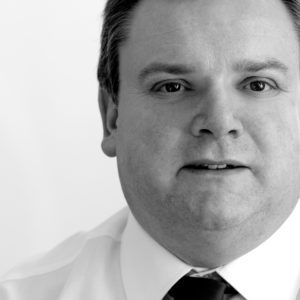
Huw Thomas

Associate Director

Huw Thomas works closely with clients to provide clear guidance and practical support, helping them navigate their legal matters with confidence and reassurance.

Get To Know Huw Thomas

As an Associate Director at Harris Fowler, Huw has extensive experience representing clients in complex clinical and medical negligence cases, including claims against Hospital Trusts, GPs, and private practitioners

Huw qualified as a solicitor in 1984, having trained in Cardiff, where he gained substantial experience in personal injury work on behalf of several large trade unions. From 1984 to 1992, Huw conducted general civil litigation at a firm of solicitors in Hertfordshire before joining a large Cambridge practice in 1992 to specialise in personal injury law.

Huw works with specialist medical experts and experienced barristers to ensure claims are handled efficiently, professionally, and with the highest standards of care.

Recognising the profound impact that medical negligence can have on victims and their families, Huw approaches every case with compassion, understanding, and a commitment to achieving the best possible outcome.

Find out if you have a claim
CALL FREE 0800 213 214

Notable Cases

Severe Brain Injury Following Missed Diagnosis After Cycling Accident

A claimant sustained a head injury following a bicycle accident, with the full extent of his injury not diagnosed in A&E, resulting in significant long-term disability. The claim, heavily contested on causation and quantum, settled for almost £1.1 million shortly before trail.

Tap to read more

Severe Brain Injury Following Missed Diagnosis After Cycling Accident

In this case the Claimant was born 1986 and suffered a head injury when falling from his bicycle, being treated at the local Accident and Emergency Department.

The case related to whether there had been appropriate treatment at that A&E attendance, with the true nature and extent of the head injury suffered by the Claimant not being diagnosed, leading to a subsequent deterioration and with the Client being left significantly disabled. Whilst negligence was admitted on behalf of the Hospital Trust there were very limited admissions as to what any negligence had resulted in for the Claimant. Accordingly the claim was virtually fully contested, with experts being relied on in the fields of Neurosurgery, Neurology, Neuropsychology and Neuro-ophthalmology, with further expert evidence being required in respect of the Claimant’s past, ongoing and future care and rehabilitation needs, to include specific expert evidence from an Accommodation Expert together with an expert in the field of visual rehabilitation, this all with a view to trying to establish the true nature and extent of the consequences suffered by the Claimant as a result of the breach of duty.

The claim was progressed to an advanced stage, virtually at the point of being listed for Trial in the High Court.

Both parties then agreed to engage in a Joint Settlement Meeting, notwithstanding the significant conflict of expert evidence that there was. The experts relied on by both parties were all very well respected in their respective fields and therefore how the case would be perceived by a Judge was very difficult to predict. The case thus involved a high degree of uncertainty.

The Defendant’s offer of settlement had been in the sum of £275,000 and the Defendant showed little inclination to increase that offer. However, as a result of the discussions which took place at the Joint Settlement Meeting the Defendant was persuaded to accept settlement at a far higher level, with the Claimant receiving almost £1.1million. Whilst a substantial sum that overall settlement had been mitigated by the Claimant’s very modest pre-accident working history, which led to there being significant doubt as to the likely extent of his future working capacity even without this injury.

Claim type: Head Injury Claim

Settlement: £1.1 Million

Fatal GP Misdiagnosis Leading to Early Admission of Liability

This GP negligence claim arose from the sudden death of a 61-year-ol patient six days after a telephone consultation in which no serious diagnosis was made. Following an early admission of liability, the claim settled for just under £270,000.

Tap to read more

Fatal GP Misdiagnosis Leading to Early Admission of Liability

This case involved GP negligence. Instructions were received from the surviving spouse of a deceased person, 61 years old at the time of a telephone consultation with a GP. The GP in that telephone consultation made no diagnosis of anything sinister and the patient’s concerns were met with a prescription of medication. Unfortunately, six days subsequently the patient died suddenly as a result of the condition, likely to have been present at the time of the telephone consultation.

Expert evidence was received from two experts, one addressing GP breach of duty, the other the issue of causation (whether any breach of duty led to an unnecessary or premature death). Both reports supported the case in respect of both breach of duty and causation, allowing for a very detailed Letter of Claim to be sent to the particular GP Practice.

Pleasingly, the detailed nature of the Letter of Claim led to there being an admission of liability, both as to breach of duty and as to causation of unnecessary death.

Attention was then focused upon settling the claim in terms of damages. Where somebody dies as a result of medical negligence damages are assessed on a different basis to a situation where the patient survives.

In essence there are four main heads of loss to be claimed, namely:-

1 The deceased’s pre-death pain and suffering and losses, being unnecessary pain and suffering brought about by the breach of duty and not by reason of any underlying condition;
2 Funeral and associated expenses;
3 A bereavement award, which is only payable to a surviving spouse or civil partner, currently fixed by law at just over £15,100 (this amount is increased every so often);
4 Often the most substantial part of these claims, depending on the individual circumstances of the client and the deceased person, lost income and services dependencies to compensate the dependents of the deceased person. Such dependency by relatives of the deceased on income (comprising both earned and pension income) need not be total and can be partial and can bring into account things such as regular gifts. A services dependency claim is meant to compensate the surviving relatives, in particular the surviving spouse, for loss of practical day to day services such as, for example, DIY, car maintenance, painting and decorating, garden maintenance and so on.

In this case a detailed Schedule of Loss setting out the above sorts of claims was prepared and put to the Defendant’s representatives.

There were issues in connection with the deceased’s likely life expectancy in any event and whilst the claim as put to the Defendant was in the region of around £320,000 it was likely that a more realistic valuation would be at around £275,000.

The Defendant made an offer of settlement of a little below £270,000 which the Client chose to accept.

Claim type: Fatal Negligence Claim

Settlement: £270,000

Undiagnosed Spinal Injury Resulting in Severe Disability

A claimant suffered a serious undiagnosed cervical spine injury following a fall, leading to significant ongoing disability and care needs. Despite liability being firmly denied and the matter progressing close to trial, the clam settled for just over £410,000.

Tap to read more

Undiagnosed Spinal Injury Resulting in Severe Disability

This case involved a Claimant born in 1939. The claimant suffered a fall away from home and unfortunately a serious spinal injury affecting her cervical spine was not detected at Hospital. This led to ongoing very significant disability involving the Claimant requiring a significant care package in the family home.

The case was an extremely complex one medically and both breach of duty (proof of negligence) and causation (proof of what any negligence had caused to the Claimant) were very uncertain and difficult to predict. There was a real risk that the case could have been lost altogether, with the Claimant then recovering nothing by way of damages.

Both sides relied on very complex medical evidence from Neurosurgical, Accident and Emergency and Anaesthesia and Intensive/Critical Care Experts. There was little agreement between the competing experts.

Throughout, the Hospital Trust had maintained a very detailed and consistent denial of any liability attaching to them and indeed had served Witness Statements from no less than eight of the medical practitioners treating the Claimant, effectively denying any blame for the way in which they had treated the Claimant.

Notwithstanding this denial of liability steps were taken to progress the case to within several months of a High Court Trial. It was only at that point that the Defendant started to indicate a willingness to try to settle the claim.

Following some negotiation the Claimant’s case was settled for just over £410,000. Even though there were mitigating factors, such as the Claimant being a retired person combined with issues of life expectancy anyway, settlement at this amount represented a significant reduction from what the claim would have been worth (possibly around a million pounds, if not more) were we to have been confident in connection with establishing liability. This case was, however, an ‘all or nothing’ case from the Claimant’s perspective and prospects of success were finely balanced.

The sum of damages received was placed into a Personal Injury Trust created for the Claimant to safeguard ongoing entitlement to state and other health benefits or funding.

Claim type: Spinal Injury Claim

Settlement: £410,000

Catastrophic Brain Injury Following Missed Diagnosis in A&E

A 61-year-old Claimant suffered severe brain damage after an alleged failure by A&E clinicians to diagnose and treat a subarachnoid hemorrhage leading to a major cerebral bleed. The high-risk, “all or nothing” claim settled for £550,000 shortly before trial

Tap to read more

Catastrophic Brain Injury Following Missed Diagnosis in A&E

This Clinical Negligence case involved a 61 year old Claimant. The claim alleged a failure within an Accident and Emergency Department to identify and treat a subarachnoid haemorrhage with which the Claimant had presented. That failure having occurred the Claimant subsequently suffered a more major cerebral bleed, with consequential severe brain damage.

The claim was fully investigated with expert evidence, and the claim was then put to the relevant Hospital Authority. There was a denial of liability, it being argued that the investigation and treatment of the Claimant was within a range of reasonable practice of a body of Accident and Emergency Doctors (the relevant legal test).

The issue of causation (that is what has resulted from breach of duty) was not as much in dispute, with it being agreed that had there been a CT scan carried out at first presentation that would have led to urgent treatment to avoid the later deterioration. However, this level of agreement in connection with causation did not mean that there was an admission of liability because of the denial of breach of duty – both elements need to be established for liability to be proven.

There was a very significant conflict of expert evidence as to breach of duty with it being proposed by both parties to call Accident and Emergency experts at trial, both of whom were well respected in their fields.

The case was therefore very much an ‘all or nothing’ case with a chance of success of broadly 50/50. If the Claimant’s case was lost they would not have recovered anything.

The case also involved expert neurosurgical evidence and Care Experts.

The Claimant was regarded as a protected party, that is a person who lacks sufficient mental capacity to instruct solicitors themselves, this by reason of the brain injury, and the Client was left significantly disabled. The overall claim was mitigated by a) the Claimant’s age, b) the fact that the Claimant was not in employment and c) by the very firm wish of the Claimant’s spouse to want to look after the Claimant at their home for as long as was possible.

The claim was prepared for a Trial and at the last minute proceeded to a Joint Settlement Meeting between the parties. The Hospital Authority had instructed a very senior barrister, then a Queen’s Counsel (now King’s Counsel).

The award for general damages for the injury alone was estimated by us at around £150,000, the Defendant arguing for a figure of around £90,000. There was a far more substantial disagreement in connection with the likely extent of what are called ‘special damages’, ie. financial expenses and in this case virtually all in respect of past and future care and rehabilitation needs. The case as pleaded by our client amounted to approximately £2.8million, the Defendant arguing for around £620,000.

Because of the risk on liability, it was felt that a settlement was appropriate to avoid the Claimant recovering nothing. Taking a more pessimistic view the claim probably had a value, were liability to be established in full of around £1.2million to £1,8million and significantly less if the Defendant’s expert evidence in connection with the true nature and extent of causation were to be accepted.

The claim proceeded to settlement in the sum of £550,000 not long following the conclusion of the Joint Settlement Meeting, thus avoiding the need for a Trial with all its uncertainties.

Claim type: Medical Negligence Claim

Settlement: £550,000

Our Services

Work Accidents

If you have been injured at work due to unsafe conditions, poor training, or employer negligence, our team can help you understand your options and pursue the compensation you deserve.

Medical Negligence

If your treatment has fallen below an acceptable standard, we can help you make a medical negligence claim and support you through every stage of the process.

Road Traffic Accidents

Whether you were a driver, passenger, cyclist, or pedestrian, we can help you make a claim following a road traffic accident and recover compensation for your injuries.

Serious Injury

If you or a loved one has suffered a serious injury, our specialist team can support you through every stage of your claim. We provide clear guidance and work to secure the compensation you need for your recovery and future care.

Start your claim

Find out if you have a claim

CALL FREE 0800 213 214